Su carrito está vacío



Carrito
Clearing a balance feels like the finish line. But if you still have other debts, it also creates a decision: where will that payment go next? An engineer and nurse couple’s approach to organizing money offers a practical place to start.
Imagine opening an account and seeing the number you’ve been waiting for.
$0 remaining.
One less bill. One less due date. One less balance following you into next month.
For the first time in a while, there’s room in the budget.
And then life starts making suggestions.
Groceries cost more than expected. The car needs attention. There’s something you’ve put off buying for months.
Sometimes, those needs should come first.
But when the budget allows, that newly available payment also gives you another option:
Put it to work on the next debt.
Suppose you’ve been paying $150 toward one balance and $400 toward another.
That’s $550 leaving your account toward debt each month.
When the first balance is paid off, its $150 payment ends. You now have a choice about what happens next.
Release the paid-off debt’s payment
$400Continues toward the remaining debt each month
Redirect the paid-off debt’s payment
$550Goes toward the remaining debt each month
In the second approach, the remaining debt receives 37.5% more each month.
Your total monthly debt budget stays at $550. The payment that finished one job starts working on the next.
That doesn’t tell us exactly how much sooner you’ll finish. We would need the remaining balance, interest rate, and payment terms to calculate that.
But it shows why the decision deserves a place in your plan.
Hypothetical payment-allocation example, not a customer result. Redirecting payments assumes your budget allows you to maintain the same total debt payment and that your account terms permit additional payments. Actual payoff effects depend on your debts.
Think of the person who keeps the household running.
She knows when insurance renews. She remembers which payment comes out automatically. She checks the account before the mortgage is due.
Paying attention takes time, and she’s already giving it.
But between work, family, and the next unexpected expense, it’s easy to focus on what must be paid this week.
Deciding what to do three months from now—when a balance might finally be cleared—can wait.
Until the month arrives.
The payment ends. The money becomes available. Without a decision in place, it can be absorbed by the rest of the household budget.
Planning for a debt to end also means planning for the payment it leaves behind.
Jose and Francis brought different backgrounds to the same family goal.
Jose, an engineer with a master’s degree, enjoyed building spreadsheets and working through numbers. Francis, a nurse, helped make the tools accessible and easy to use.
Becoming parents gave their financial planning a new purpose.
They had their own obligations to work through. Their story describes paying off over $30,000 in student loans and clearing their car debt three years early, using disciplined budgeting and the spreadsheets they created.
Their results reflect their circumstances. Another household’s progress will depend on its own income, expenses, balances, and decisions.
But organizing the numbers gives any planning conversation a more concrete starting point.
What are we paying now? Which balance are we working on? What happens when that balance is gone?
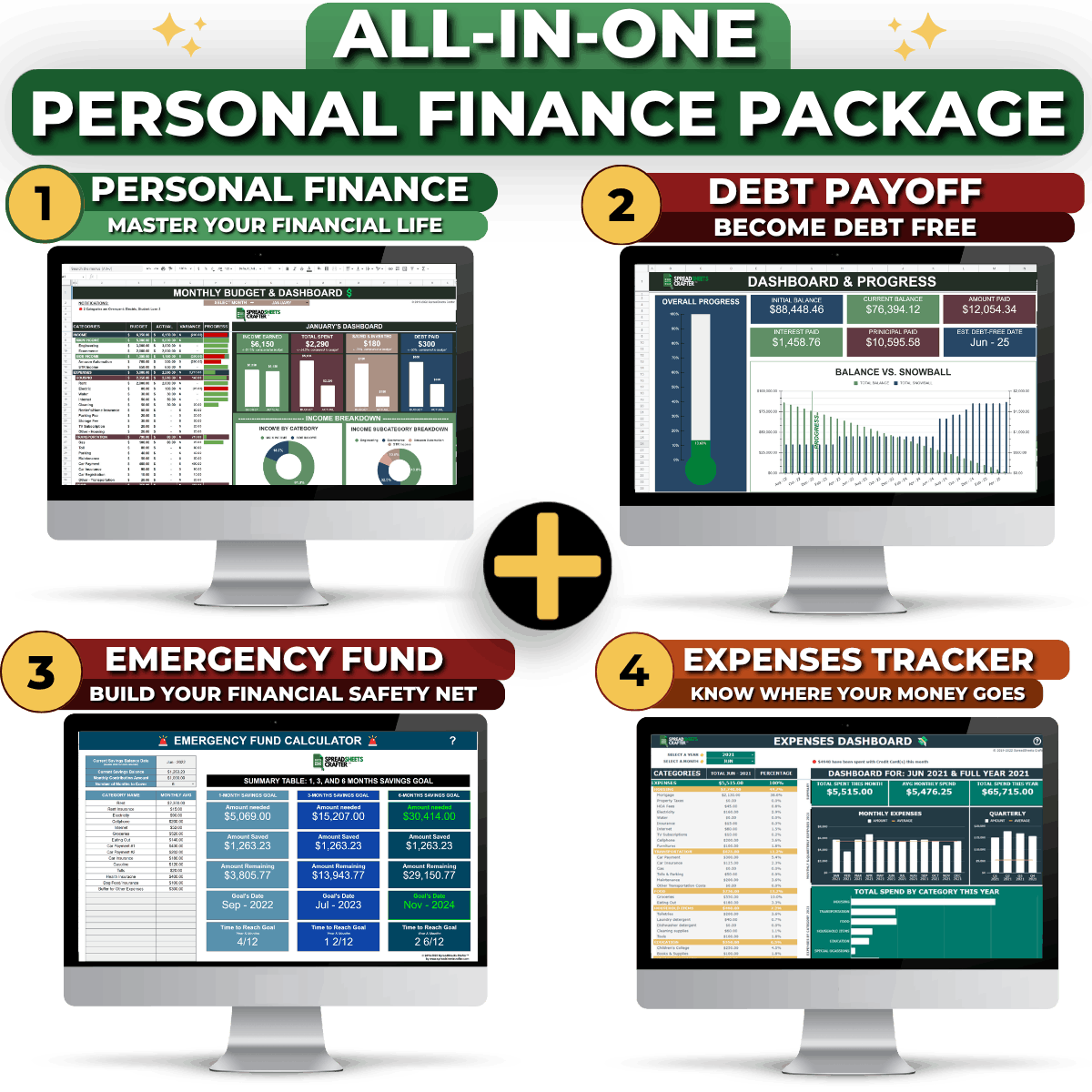
The Debt Payoff Calculator and Tracker brings your debt information together so you can explore a repayment plan.
Enter balances, interest rates, and minimum payments. Compare snowball and avalanche approaches. Review a payment schedule and estimated completion date.
You can also explore additional payments and follow your progress over time.
With your plan in front of you, it becomes easier to consider the next decision before the next month arrives.
Seeing one debt disappear can be motivating. Reducing an expensive interest rate’s impact can also be a priority.
The calculator lets you compare two familiar approaches: snowball, which prioritizes the smallest balance, and avalanche, which prioritizes the highest interest rate.
Required payments on the other debts remain part of the plan.
Comparing the approaches gives you a way to examine the tradeoffs using your own information.
You can look beyond the next bill and consider how you want the whole repayment process to unfold.
Your estimated payoff timeline. Review a projected completion date based on your inputs.
The effect of additional payments. Explore how contributing more could change the projection.
Where your payments go. See principal, interest, and remaining balances.
Your progress over time. Follow changes with graphs and progress bars.
Excel and Google Sheets versions are included, along with instructions, a currency selector, and lifetime updates. It’s a one-time purchase with no subscription.
An available $150 can attract a lot of competing priorities.
Making a decision before it becomes available gives you time to consider those priorities.
Perhaps the money needs to rebuild your emergency savings. Perhaps an essential expense is coming. Perhaps you can keep some or all of it moving toward debt.
The right decision needs to fit your household.
Having your balances and payment plan organized helps you make that decision with a clearer view.
Your next cleared balance will be worth celebrating.
Before that day arrives, take a look at what comes after it.
Gather your debt details. Explore the available strategies. Review a payment amount your budget can support.
Then give yourself a plan to return to as each balance changes.
The end of one payment could become the beginning of your next milestone.
One-time purchase · Excel and Google Sheets · No subscription